

On this page
Why it develops
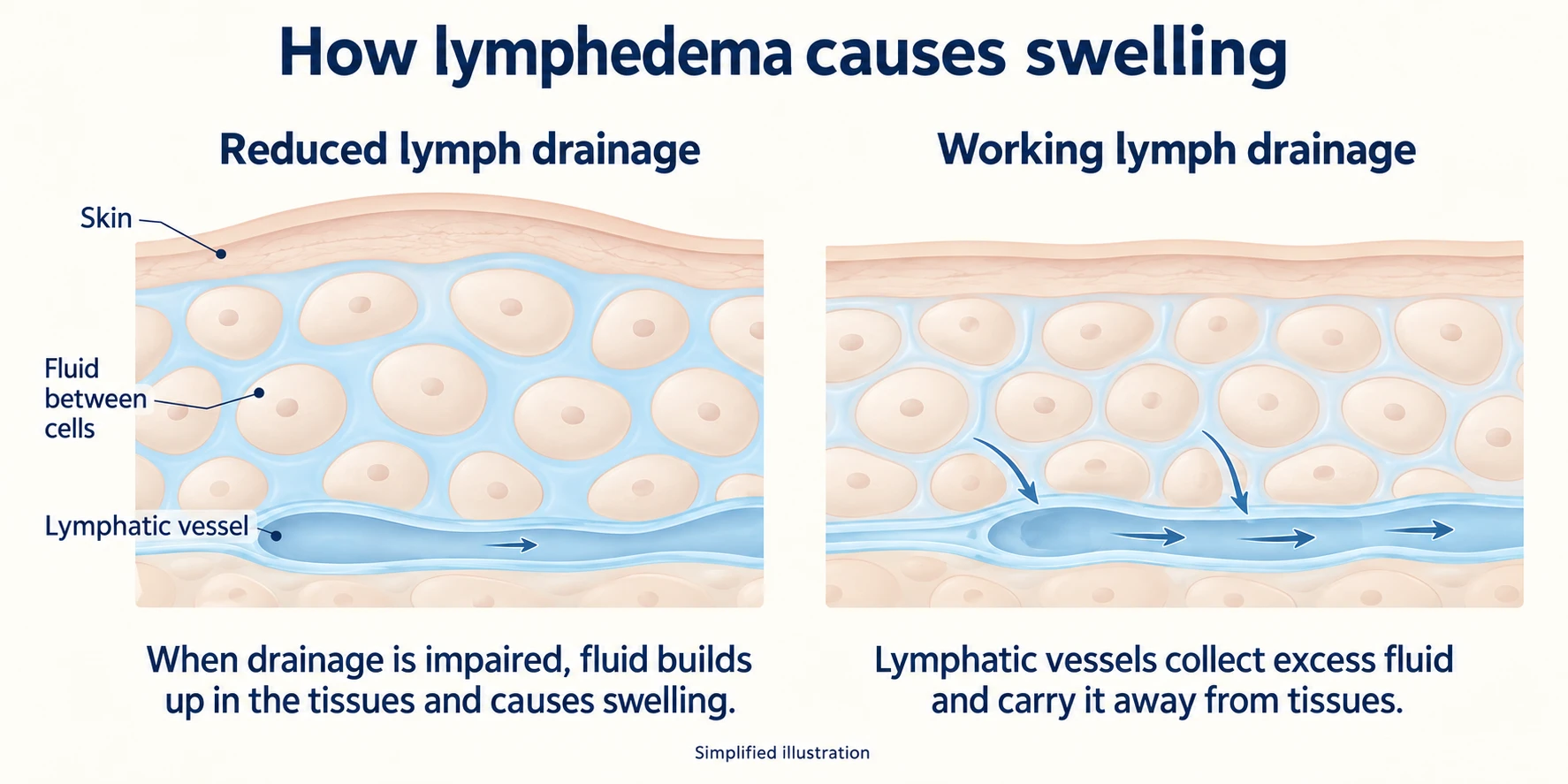
When lymphatic vessels cannot carry enough fluid away from a region, fluid and proteins collect in the tissues. Persistent swelling can be accompanied by inflammation and changes in skin, fat, and connective tissue.1
Primary lymphedema relates to differences in how the lymphatic system developed or functions. It can appear at different ages. Secondary lymphedema follows damage or disruption from another cause, such as cancer treatment, injury, or infection. These terms describe the origin, not the severity.1
Cancer-related lymphedema may begin during treatment or years later. The area affected depends on the lymphatic pathways involved.3,2
Symptoms and assessment
Persistent or recurring swelling, heaviness, tightness, changes in clothing fit, and firmer tissue can be reasons to seek assessment. These symptoms have other possible causes, including vein disease, medication effects, infection, and some heart or kidney conditions.1,4
A clinician considers your history and examines the affected area. Measurements establish a baseline and help track change; tests or imaging may be needed when the cause is unclear. Diagnosis is not based on appearance or one measurement alone.4
See Signs and symptoms for a more detailed guide to changes worth reporting.
What management involves
Lymphedema care combines several approaches. Depending on your needs, these may include:
- Compression garments
- Complete decongestive therapy or limb decompression
- Skin care
- Movement and exercise
- Manual lymphatic drainage
- Education and practical self-management skills
Some people need an intensive period of swelling reduction followed by maintenance. Others require a different level of care. Compression and home techniques should be selected and taught for your condition and body area.1,5,6
Specialist surgery may be considered in selected cases, generally alongside ongoing conservative care. Neither surgery nor hands-on treatment should be presented as a guaranteed cure.1
Living with a long-term condition
Lymphedema generally gets about 10% worse each year if left untreated. Care can affect clothing, work, travel, time, and cost. If a garment is difficult to apply or a routine is too demanding, ask your team to review it. Progress can include easier movement, improved comfort, or a more manageable routine-not only a change in limb size.
The everyday care guide covers these practical questions. The treatment guide explains the evidence behind individual approaches.
When symptoms need medical attention
Lymphedema increases the risk of cellulitis, a bacterial skin infection. New warmth, spreading skin colour change, increasing pain or swelling, fever, chills, or feeling unwell needs prompt medical assessment. Do not massage a possibly infected area.2,7
New one-sided swelling with pain, warmth, or tenderness also needs prompt assessment for a possible clot. Call 911 for sudden shortness of breath, chest pain, coughing up blood, or fainting.8
This guide provides general education. Your healthcare team can advise on diagnosis and an individual management plan.
References
- Executive Committee of the International Society of Lymphology. The Diagnosis and Treatment of Peripheral Lymphedema: 2023 Consensus Document of the International Society of Lymphology. Lymphology. 2023;56(4):133–151. Accessed September 16, 2026. ↩︎1 ↩︎2 ↩︎3 ↩︎4 ↩︎5 ↩︎6
- National Cancer Institute. Lymphedema and Cancer. Accessed September 16, 2026. ↩︎1 ↩︎2 ↩︎3
- Canadian Cancer Society. Lymphedema. Accessed September 16, 2026. ↩︎
- National Cancer Institute. Lymphedema (PDQ®)–Health Professional Version. Updated December 18, 2024. Accessed September 16, 2026. ↩︎1 ↩︎2
- DiCecco S, Davies CC, Gilchrist L, et al. Complete decongestive therapy phase 1: an expert consensus document. Medical Oncology. 2024;41:304. Accessed September 16, 2026. ↩︎
- Canadian Lymphedema Framework. Getting treated. Accessed September 16, 2026. ↩︎
- MyHealth.Alberta.ca. Cellulitis. Current as of December 4, 2024. Accessed September 16, 2026. ↩︎
- HealthLink BC. Deep Vein Thrombosis. Current as of December 19, 2022. Accessed September 16, 2026. ↩︎