

How the Lymphatic System Works
The lymphatic system helps maintain fluid balance, supports your immune defences, and transports fats absorbed during digestion. Understanding these roles can help explain why swelling develops when lymphatic drainage is disrupted.
On this page
Returning fluid to the bloodstream
As blood circulates, fluid passes from small blood vessels into surrounding tissues. This allows nutrients and other substances to move between the blood and your cells.
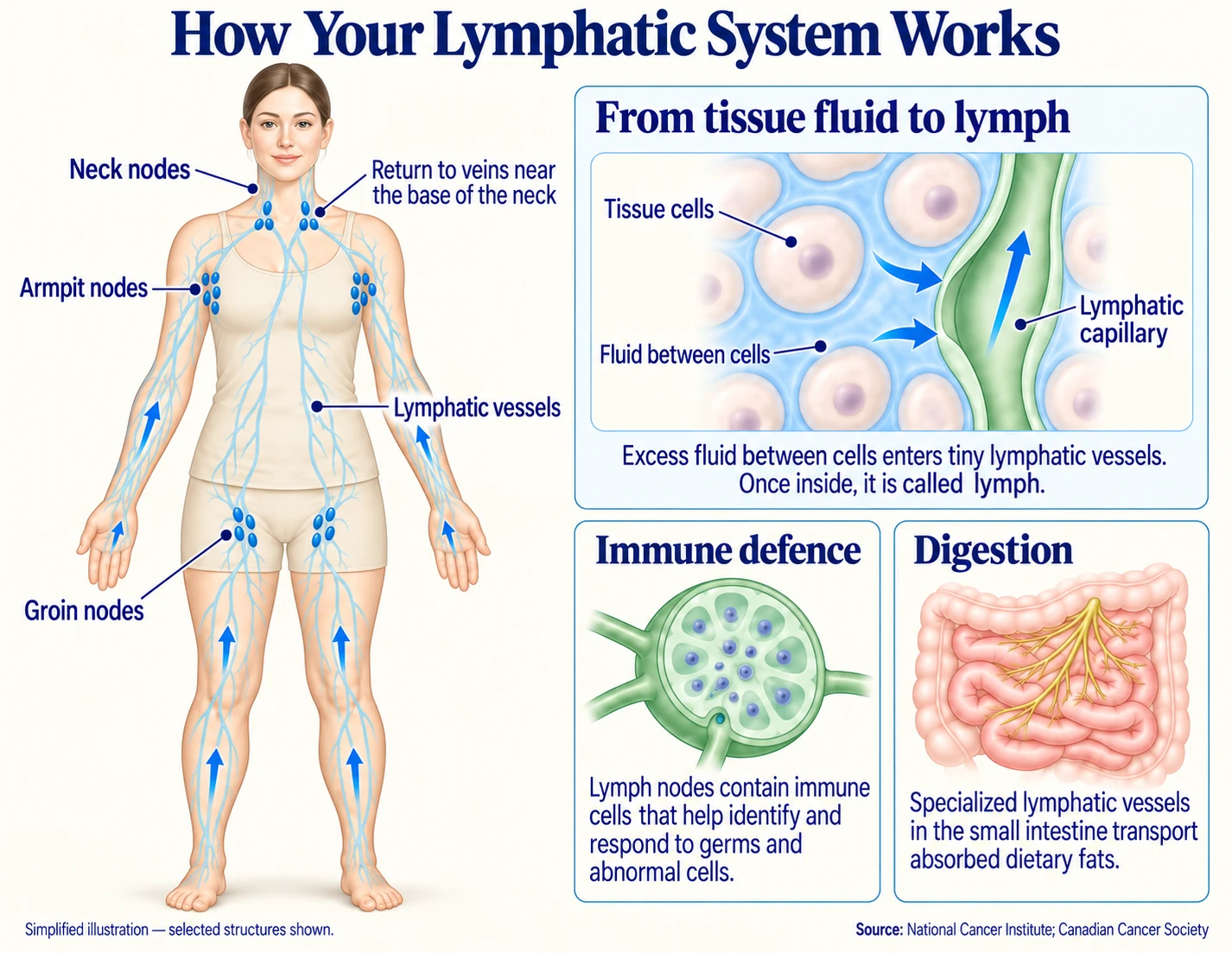
Tiny lymphatic vessels collect excess fluid and carry it back toward the bloodstream. Once inside these vessels, the fluid is called lymph. It travels through a network of progressively larger vessels before returning to veins near the base of the neck. National Cancer Institute
What keeps lymph moving?
The lymphatic system has no single pump like the heart. Instead, several forces work together:
- Muscles in the walls of lymphatic vessels contract to move fluid.
- Movement of surrounding muscles helps propel lymph.
- Breathing creates pressure changes that support its movement.
- One-way valves help prevent backward flow.
This movement happens throughout the day, including while you are resting. Physical activity supports a process that is already working within your body. National Cancer Institute
What do lymph nodes do?
Lymph nodes are small structures found along lymphatic vessels, with groups in areas such as the neck, armpits, abdomen, and groin. Adults have between 400 and 800 lymph nodes distributed throughout the body. Roughly half of all your lymph nodes are located in the abdominal and pelvic regions.
They contain immune cells that identify and respond to germs and abnormal cells carried in lymph. Nodes can become enlarged while responding to an infection, which is why you may notice swollen glands when you are ill. Canadian Cancer Society
Its role in digestion
Specialized lymphatic vessels in the small intestine absorb and transport much of the fat from food. These fats travel through the lymphatic system before entering the bloodstream, where they become available for the body to use or store. Review of intestinal lymphatic function
Why swelling can develop
When lymphatic vessels cannot carry fluid away effectively, it can accumulate in the tissues. Persistent swelling caused by this reduced drainage is called lymphedema.
Some people are born with differences in their lymphatic system. Others develop problems after damage to vessels or lymph nodes, including from surgery or radiation treatment. Over time, persistent lymphedema can also lead to inflammation and changes in the skin and underlying tissue. National Cancer Institute
Understanding the cause of swelling helps determine the right care. Our guides to Understanding Lymphedema and Understanding Your Lymphatic Treatment Options explain what assessment and treatment can involve.